Balsamic Vinegard of Modena

To obtain sublime Balsamic Vinegard we need above all
patience, devotion and respect for the ancient traditions which
have been handed down for four generations at Leonardi Balsamic farm.

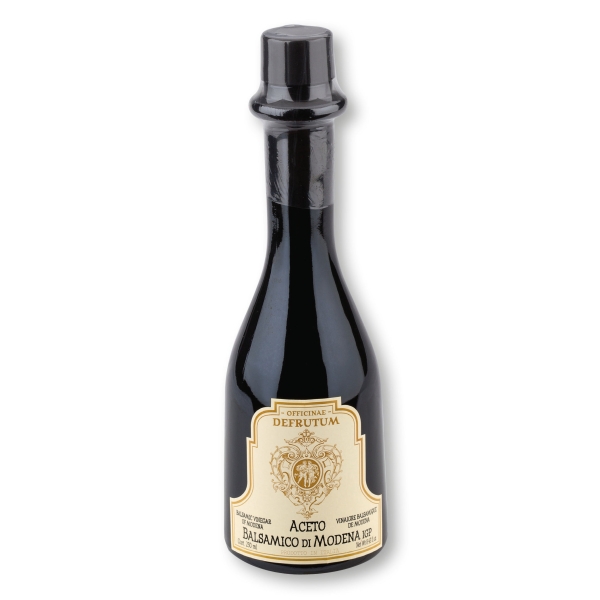
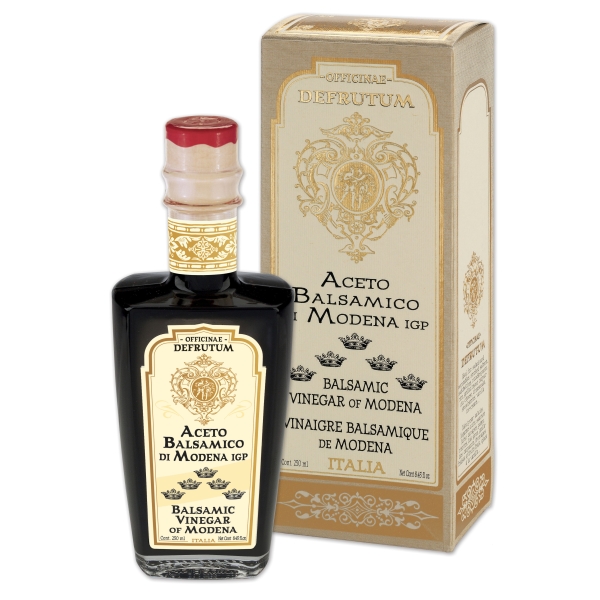
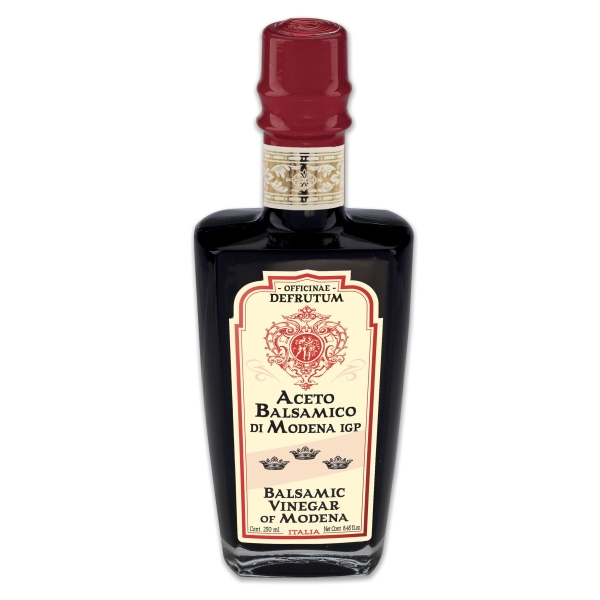
Balsamic Vinegar is recognizable for its typical syrupy thickness and for its shiny brown colour showing golden shades. Aromas are intense and deep, with a vivid bouquet of wild berries, vanilla and a slightly sharp note. When tasted, balsamic combines intensity and softness, leaving in mouth a bodied and juicy aftertaste of vanilla, Thanks to the ageing in oak barrels. Balsamic pairs well with the Mediterranean Italian cuisine but its sweet-and-sour feature enables to use it on worldwide dishes, which then become unique and special.

How it's produced

Traditional Balsamic Vinegar of Modena D.O.P.

Pick-up of grapes

The pick-up is still made by hand, according to the tradition, selecting the best bunches of Trebbiano and Lambrusco grapes. It happens during September and October, when the ratio between sugars and acidity is at its most and this is an important phase of the whole process because the quality and integrity of bunches are essential before going through the pressing. The other important operation is the cutting of branches which is made during winter and which determines the health of the plants and then of the future pick-ups.

Pressing

The squeezing of grapes is made with a "soft" system, to avoid the excess of Polyphenols present in the peel, seeds and stalks which delay the acetifying process and could provide bitterness to the end product. The must is then filtered to eliminate the residual solid parts and impurities.

Cooking

The must is cooked within 24 hours from pressing to avoid the fermentation, in stainless steel boilers, with open top and on direct fire for 36 - 48 hours until the juice reaches a concentration of 50%. The cooked must is then cooled down and put on rest to decant until January.

Ageing

The must is put in batteries of wood barrels, made of minimum 9 barrels placed in decreasing size, from 180 to 10 litres. Each barrel is made of a different type of wood (oak, ash, juniper, cherry, mulberry, chestnut...) and is full for 75% of its capacity. The series of barrels are placed in the attics because there the temperature range is higher (very hot summers and chilly winters) which are optimal conditions for the ageing. The barrels are open to enable the natural concentration of the liquid by evaporation. The methods of ageing are usually handed down from father to son and do not follow one only rule, they depend on the long experience and personal taste of the master taster. The next phases happen during the ageing time and can last forever!

Transfers

During the ageing period, the Balsamic vinegar, subjected to the summer heat and the winter cold, is annually moved into another barrel to acquire the different essences of the woods. This delicate operation happens during winter, when the Balsamic Vinegar is "sleeping" because of the low temperatures which stop the fermenting activity. The transfer is the passage of the liquid from the bigger barrel into the nearby smaller barrel. On contrary, the replacement is the filling of the just emptied barrel. The first operation always includes the second one except for the first barrel which starts the battery and is only transferred with the cooked must. There is a constant control of the barrels to check the conditions of the container and its content.

Tasting

Every year sensorial tests are run on every barrel, to control the limpidity, the flavour, the colour and taste of the liquid. We use a glass container to pour the liquid taken from a barrel through the apposite glass pipette. For the visual test, it is better to use the light of a candle to evaluate the colour and consistency through the transparent container in backlight. The olfactory parameters include the intensity, the persistence of perfumes and the acidity, whereas the taste is checked through the intensity, the flavor, the harmony between sour and sweet and the acidity. A china spoon is preferred for the tasting as it does not alter the flavor. Various master tasters compare their results to guaranty the best objective quality.
Shopping Cart
Your cart is currently empty!.

You may check out all the available products and buy some in the shop.

Continue Shopping
Add Order Note
Estimate Shipping